
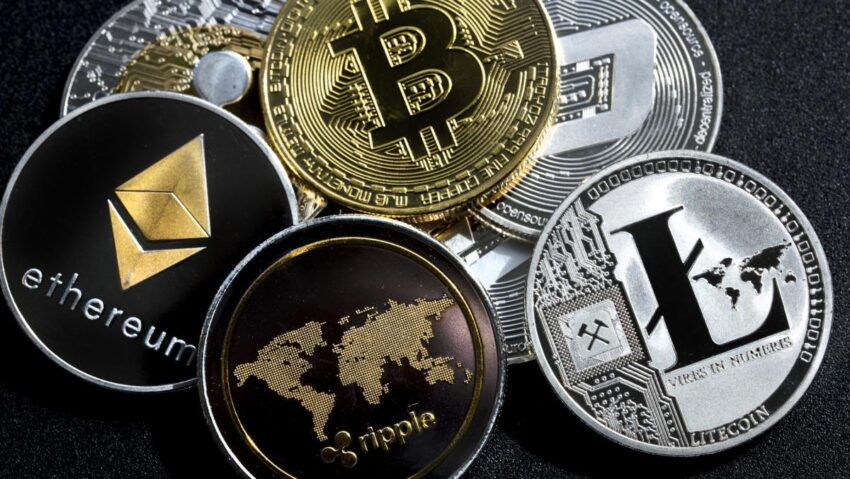
Money — it’s something we use almost every day. Yet few of us stop to consider where it came from or how it evolved into the currencies we use today.
Firstly, what is money?? There are many definitions we can come up with based on context but we all agree:
Money can simply be defined as a means of value exchange.
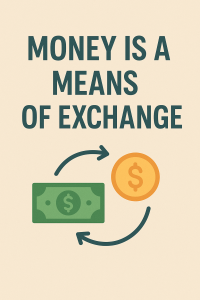
You produce a piece of furniture, I produce some clothes… We exchange value for value. But sometimes I don’t want what you produced, so I need something to hold the value to exchange for something else. That’s where money comes in. It becomes a placeholder for value. This value can then be used to purchase any other stuff.
In other words it is also a store of value.
Money has been with us for a long time and almost every century it changes its look and value. The first ever money originated in Mesopotamia which was made from seashells and beads. This later evolved to the use of coins by Lydians and all the way to the cash and payment systems we use today.
Let’s briefly explore the history of money, from primitive trade to what obtains today!!
1. Barter System: The Origin of Money
Before money existed, humans relied on trade by barter — the direct exchange of goods and services. A farmer might trade wheat for a jewelry or a fisherman might offer fish in return for firewood.
But barter had major flaws:
- It required a both parties needed something the other had.
- It lacked common value, making it a tricky system. It could not be easily measured.
These inefficiencies paved the way for evolution money as we know it.
2. Commodity Money: Nature’s Currency
Considering all options at the time, physical items which met some criteria were adopted as money. There came commodity money, the value of this type of money came from the items of which it is made.
To improve trade, societies began using items of inherent value like:
- Cowry shells
- Salt blocks
- Livestock and grain
- Precious metals like gold and silver
These commodity currencies served as early forms of money because they were:
- Widely accepted
- Durable
- Divisible and transportable
3. Coinage: The Birth of Standardized Money
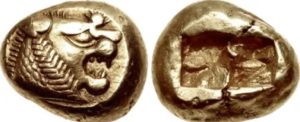
The first official coins appeared in Lydia (modern-day Turkey) around 600 BCE, made of electrum (a gold-silver alloy). This innovation spread across ancient Greece, Rome, India, and China.
Key milestones:
- Coins were stamped to guarantee weight and authenticity.
- Governments began controlling minting, creating a link between money and political power.
- Portability and trust increased
- Coins spread across empires like Greece, Rome, India, and China
4. Paper Money: Lightweight Wealth
The Chinese were the first to use paper money during the Tang Dynasty (7th century), with wide circulation under the Song Dynasty in the 11th century.
Why it mattered:
- Paper money was easier to carry than coins.
- It represented value rather than containing it.
Europe adopted paper money much later, with Sweden issuing the first European banknotes in the 17th century.
5. Banking & Centralization
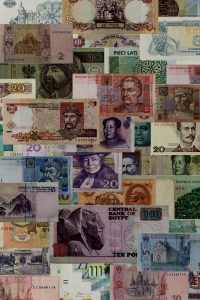
With money came banks. In medieval Italy, institutions like the Medici Bank formalized lending, deposits, and credit.
Key developments:
- Central banks (e.g., the Bank of England, 1694) were established.
- The gold standard tied currencies to gold reserves, providing stability.
By the 20th century, fiat money — currency backed by governments rather than gold — became the global standard.
6. Digital Revolution: Cards, Transfers & Mobile Money
In the late 20th century, we entered the digital age of money:
- Credit cards became mainstream.
- Electronic bank transfers revolutionized how we move money.
- Mobile banking apps made money management accessible to millions.
7. Cryptocurrencies: Decentralized and Disruptive
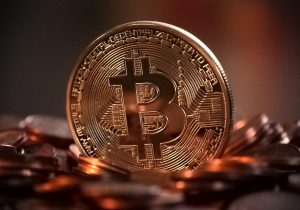
The latest chapter began in 2009 with the creation of Bitcoin by the mysterious Satoshi Nakamoto. Cryptocurrencies introduced:
- Decentralized control
- Blockchain technology
- Peer-to-peer value transfer without banks
- Transparent, immutable ledgers
- Resistance to inflation and censorship
Today, digital assets like Bitcoin and Ethereum challenge traditional monetary systems and spark global debates.
Conclusion: The Evolution Continues
From shells to blockchains, the history of money reflects our ingenuity, trust systems, and technological progress while revealing money is constantly evolving and not static. While the form of money keeps changing, its core purpose — facilitating exchange — remains timeless.
What will money look like 100 years from now? Only time will tell. But if history is any guide, it’ll be smarter, faster, and probably not made of paper.