
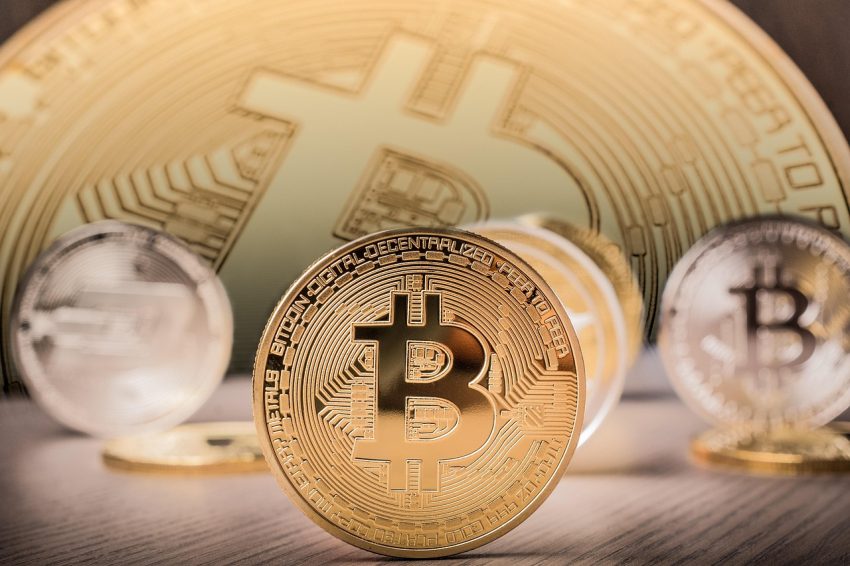
The History of Bitcoin: The Rise of the Digital Gold
When Bitcoin first appeared in 2009, few people could have predicted that it would one day become a global financial phenomenon — challenging traditional banks, reshaping how we think about money, and inspiring an entire industry of cryptocurrencies. Yet, Bitcoin’s story is more than just about technology or investment — it’s a story about trust, innovation, and the future of money.
Let’s take a journey through the history of Bitcoin — from its mysterious beginnings to its rise as the world’s first decentralized digital currency.
1. The Beginning: A Response to the Financial Crisis (2008–2009)
The roots of Bitcoin can be traced back to the 2008 global financial crisis. During this time, trust in banks and centralized financial institutions was at an all-time low. People watched governments bail out failing banks while ordinary citizens suffered the consequences.
Then, in October 2008, a mysterious figure (or group) using the pseudonym Satoshi Nakamoto published a white paper titled “Bitcoin: A Peer-to-Peer Electronic Cash System.”
This paper introduced a revolutionary idea — a digital currency that allowed people to send money directly to each other without the need for banks or intermediaries.
Just a few months later, in January 2009, the first Bitcoin block — known as the Genesis Block — was mined. Embedded within it was a powerful message:
“The Times 03/Jan/2009 Chancellor on brink of second bailout for banks.”
It was a statement — and a protest — against the centralized financial system.
2. The Early Days: Experiments and Enthusiasts (2009–2012)
In Bitcoin’s earliest days, it was more of a tech experiment than a currency. Early adopters were mostly cryptography enthusiasts and software developers fascinated by the concept of decentralized money.
In 2010, something historic happened: the first real-world Bitcoin transaction.
A programmer named Laszlo Hanyecz paid 10,000 BTC for two pizzas. At the time, those bitcoins were worth about $40. Today, that same amount would be worth hundreds of millions of dollars!
That day is now celebrated in crypto culture as “Bitcoin Pizza Day.”
By 2011, Bitcoin started gaining more attention. Other cryptocurrencies — like Litecoin and Namecoin — began to emerge, inspired by Bitcoin’s open-source code.

3. Growth, Controversy, and Recognition (2013–2016)
Between 2013 and 2016, Bitcoin experienced both explosive growth and serious challenges.
Prices began to rise as more people and businesses started accepting Bitcoin as a form of payment. However, this period was also marked by controversy — particularly the Silk Road case, where Bitcoin was used for illegal online trade.
When authorities shut down the platform, critics claimed Bitcoin was only useful for criminals. But the technology itself survived — and even grew stronger.
At the same time, Bitcoin exchanges began appearing worldwide, making it easier to buy and sell the digital currency. Governments started taking notice, sparking discussions about regulation and the future of decentralized finance.
4. The Mainstream Breakthrough (2017–2020)
2017 was a turning point. Bitcoin’s price soared from under $1,000 in January to nearly $20,000 by December. The world was suddenly paying attention.
This was also the period when blockchain technology — the underlying system that powers Bitcoin — began to be recognized as a revolutionary innovation with potential far beyond cryptocurrency.
But as interest grew, so did the challenges. The Bitcoin network faced scalability issues, leading to debates that eventually resulted in a major split — the creation of Bitcoin Cash (BCH) in 2017.
Despite volatility, the idea of a decentralized, borderless currency had firmly taken root.
5. Bitcoin Today: From Rebellion to Recognition (2021–Present)
In recent years, Bitcoin has evolved from a niche digital experiment into a global financial asset.
Major companies like Tesla, MicroStrategy, and PayPal have invested in or adopted Bitcoin in some form. Even national governments — like El Salvador — have recognized Bitcoin as legal tender, marking a historic milestone.
Bitcoin is now often referred to as “digital gold” — a store of value and a hedge against inflation. Its total supply is limited to 21 million coins, which adds to its scarcity and long-term appeal.
Though the price continues to fluctuate, Bitcoin’s influence is undeniable. It has paved the way for an entire ecosystem of innovation — including decentralized finance (DeFi), non-fungible tokens (NFTs), and Web3 applications.
6. The Legacy: More Than Just Money
Bitcoin’s true impact goes beyond price charts or profits. It represents a shift in power — from centralized authorities to individuals. It challenges traditional notions of money, trust, and control.
For the first time in history, people can hold and transfer value without permission, censorship, or reliance on banks.
In that sense, Bitcoin is not just a financial invention — it’s a philosophical movement.
Conclusion: The Future of Bitcoin
From a white paper shared on a cryptography mailing list to a trillion-dollar global market, Bitcoin’s journey has been extraordinary. Its history is still being written — one block at a time.
Whether you see it as a currency, a technology, or a revolution, one thing is clear:
Bitcoin has changed the world of money forever.